About the project
From research in conductive materials to prototypes for autonomous maritime signaling.
What is Bioē
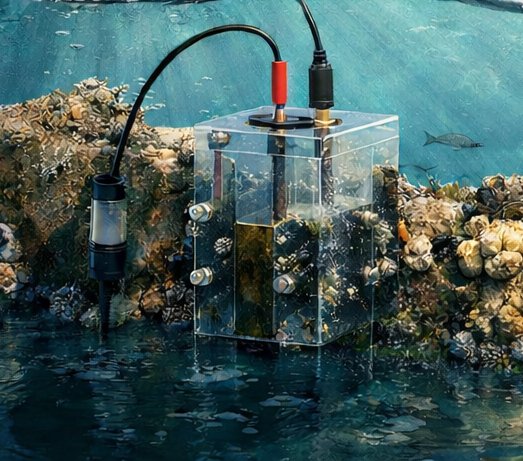
Bioē investigates the bioelectrochemical potential of marine biofouling communities — the organisms that naturally colonize submerged surfaces — as they develop on different electrically conductive substrates.
The project evaluates electrical parameters such as voltage, power and energy stability throughout colonization, from the initial stage to the formation of mature communities, and develops integrated electronic systems — with low-power DC–DC converters — capable of harnessing this energy.
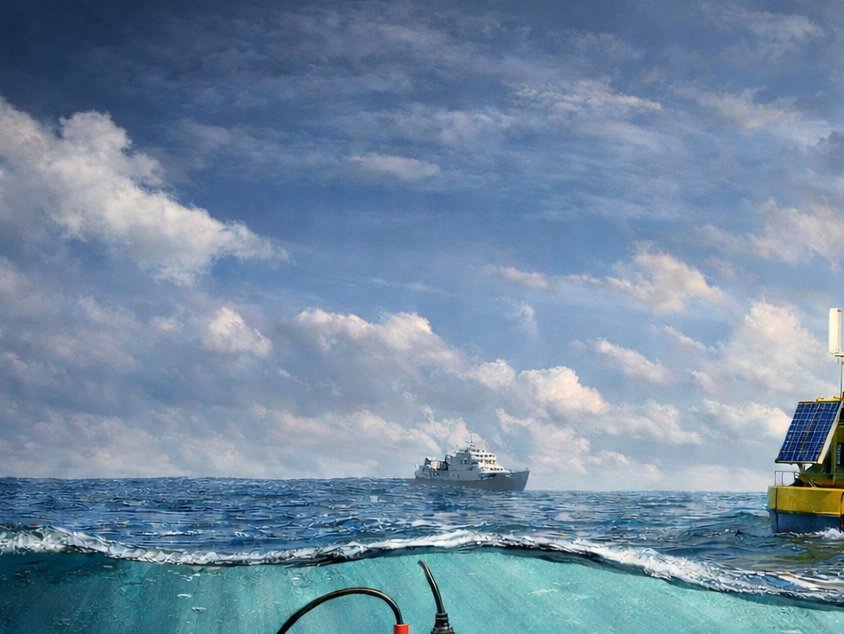
The energy generated is intended to power autonomous electronic systems for maritime signaling and environmental monitoring, especially in remote and hard-to-reach areas.
A research trajectory
Bioē is the result of an interdisciplinary trajectory spanning marine biology, materials science, bioelectrochemistry and embedded electronics. It began with the study of conductive materials based on exfoliated graphite (ERG) and evolved, through the Obras Vivas project, into exploring how biofouling — a biologically active interface — can be harnessed to generate energy through selective colonization.
These lines of research converged into autonomous maritime signaling prototypes, tested in the field.
- 2015–2021Research on ERG-based conductive materials (exfoliated graphite), in national collaborative programs (INCT–Inomat).
- 2021–2023Field studies relating conductive substrates to the structure of marine biofouling communities.
- 2024–2025Implementation of the Obras Vivas project, establishing biofouling as a functional biological interface.
- 2022–2025Development of energy generation, electrified interfaces and autonomous low-power electronic systems.
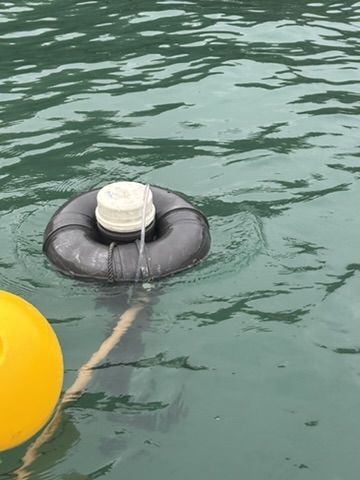
- 2024–2025Construction and testing of autonomous maritime signaling prototypes — 1st Prize Maritime Mindset (FEBRACE 2025).
- 2025–presentIntegration of these research lines into the Bioē Project, focused on renewable energy and marine monitoring.
Where it happens
The research is conducted by Unicamp's Institute of Biology, in Campinas, with field campaigns at two bases on the South Atlantic coast: CEBIMar – USP, in São Sebastião, and the Instituto de Pesca (Fisheries Institute), in Ubatuba.
These are the field sites where the test plates are installed, monitored and photographed over time, tracking biological colonization on the different conductive substrates under real sea conditions.
Who's involved
A multidisciplinary group of researchers and technical staff, bringing together marine biology, materials science, electrochemistry, electronics and environmental monitoring — working in an integrated way, from scientific conception to field implementation.
Meet the team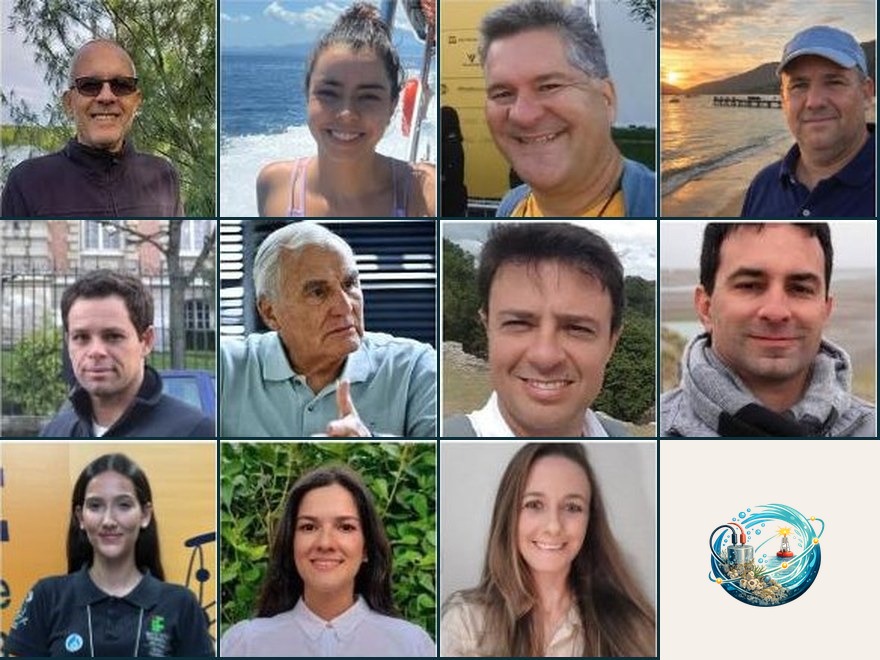
Want to know the full project?
Full scope, history, team and detailed experiments are on the official Bioē site.
See the full history